The Tiny Triangle Arrow Next to Your Gas Gauge 80% of Drivers Never Notice
I pulled into a gas station in Denver in a rental car, got out, and discovered the filler cap was on the other side. So I got back in, drove around the whole lot, queued again behind two cars, and pulled up on the correct side: where I then sat for four minutes because the pump in front of me was out of order.
I did the exact same thing the next morning. And again two days later, at which point a guy at the next pump watched the whole performance, walked over, leaned in my window, and tapped the dashboard. "There's an arrow, man."
There is an arrow. It's been there my entire driving life. It's on almost every car built in the last twenty-odd years, it's about three millimeters tall, it sits right next to the little fuel pump icon on your gas gauge, and it points to the side of the car your fuel filler is on. I had looked at that gauge probably forty thousand times and never once seen it.
Every single person I've told this to since has gone out to their driveway to check. All of them came back slightly annoyed.
Why it exists and why nobody sees it
Carmakers started adding the indicator widely in the 1990s and 2000s, largely because rental fleets and multi-car households made "which side is it on" a genuinely common moment of confusion. It's one of the cheapest usability features ever added to a car: a printed triangle that costs nothing and answers a question you have several times a month.
The reason it goes unnoticed is that your eyes learned to read that gauge as a single object years ago. You look at the needle, you register roughly how much fuel you have, and you look away: the whole thing takes a quarter of a second and your brain never parses the small symbols beside it. It's the same reason people drive the same car for a decade without knowing what half the dashboard icons mean.
Step 1: Look at your fuel gauge while parked
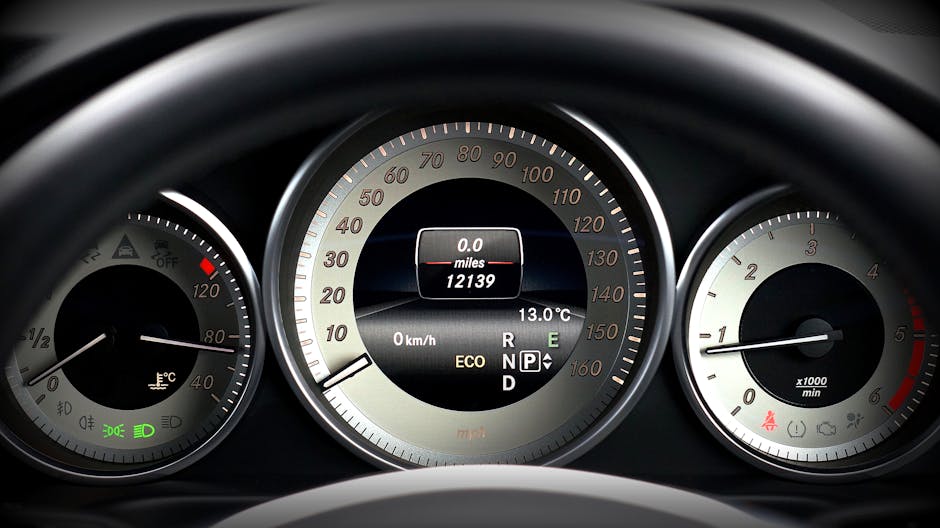
Sit in your car with the ignition on, look at the fuel gauge, and find the little pump symbol beside it. Do this parked in your driveway, not at 60mph on a highway, because you'll be squinting at something tiny. Turn the interior light on if it's dark. On a digital cluster the symbol may only appear when the ignition is fully on rather than in accessory mode.
Step 2: Find the triangle and read which way it points
Look immediately to the left or right of the pump icon for a small solid triangle or arrowhead. That's it: that's the whole feature. If it points right, your filler cap is on the passenger side in a left-hand-drive car; if it points left, it's on the driver's side. It refers to the sides of the car itself, not to anything on the dashboard. Take ten seconds to look at it properly now and you'll never have to look again.

Step 3: No triangle? Look at the pump icon itself
On many cars without an arrow, the little pump symbol's hose does the same job, whichever side the hose hangs from is the side your filler is on. This is the quieter version of the same idea and it's on a lot of European models in particular. It's a strong convention rather than a guarantee, so treat it as a very good hint rather than gospel. If your car has neither, quite common on anything built before the mid-1990s: the old fallback is that the filler is usually on the opposite side from the exhaust pipe, which is right more often than chance but nowhere near always.

Step 4: Verify it once, in your driveway
Walk around to the side the arrow indicates and confirm the cap is actually there. Thirty seconds, once, forever. I'd particularly do this on an imported car or one that's had an instrument cluster replaced, where the gauge may not have come from a car built to the same spec. Once you've confirmed it, the symbol becomes something you can trust at a glance for as long as you own the car.
My Expert Tip: When you do end up on the wrong side anyway, don't stretch the hose over the roof or across the trunk. Most hoses physically reach, which is exactly what tempts people, but dragging a heavy rubber hose over paintwork leaves fine scratches, and more importantly, a taut hose pulling at an angle puts load on the breakaway coupling that's designed to separate if a car drives off with the nozzle attached. A hose at full stretch across your car is one distraction away from a fuel spill. Just loop around and requeue; it costs ninety seconds.
Step 5: Use it the moment you're in an unfamiliar car
Check the arrow when you first sit down in a rental, a loaner, or a friend's car: before you ever need fuel. This is where the whole thing actually earns its keep. Glance at the gauge in the rental lot, register "left," and you'll pick the correct lane at the station three days later without a thought. It's also worth a look in your second car at home, since there's no rule that says two cars in the same household fill on the same side.

Step 6: Go find the other things on your dash you've never read
While you're in there: spend five minutes with the dashboard section of your owner's manual. Almost everyone is carrying around two or three warning lights they couldn't identify under pressure: the tire pressure symbol gets mistaken for a gravy boat, and the one that actually means "stop driving now" (oil pressure) looks a lot like the one that means "top this up when convenient." Knowing which is which before it lights up on a dark road is worth considerably more than the arrow.

What a three-millimeter triangle is actually worth
Two seconds of looking, once. Against three to five minutes each time I pulled up on the wrong side, repositioning, requeuing, sometimes waiting behind someone paying inside, which for me was happening maybe fifteen times a year, mostly in rentals and mostly in unfamiliar cities where I was already late. That's the better part of an hour a year, plus the specific low-grade humiliation of reversing out of a fuel queue while somebody waits.
The part I like is that this isn't a hack at all. It's a feature someone deliberately designed and printed on your dashboard, and it's been quietly doing its job for decades waiting for you to notice it. There's something a bit humbling about how much of that is going on in objects we use every day.
Go out to your car right now and look: then hit the share buttons below and send this to the person you've personally watched drive around a gas station twice.