Why You Should Put Chalk in Your Tool Box and Jewelry Box Tonight
I inherited my grandfather's socket set. Not a nice new one: the heavy old kind in a dented metal case, where every socket has his initials scratched into it because he worked in a shop where things walked off. I put it in my garage in October, felt very sentimental about it, and opened it again in April to find orange rust blooming across half the sockets like mold on bread.
Same winter, a silver chain my grandmother gave me went from bright to a dull brownish-purple sitting in a jewelry box on my dresser, untouched, in a room with heating.
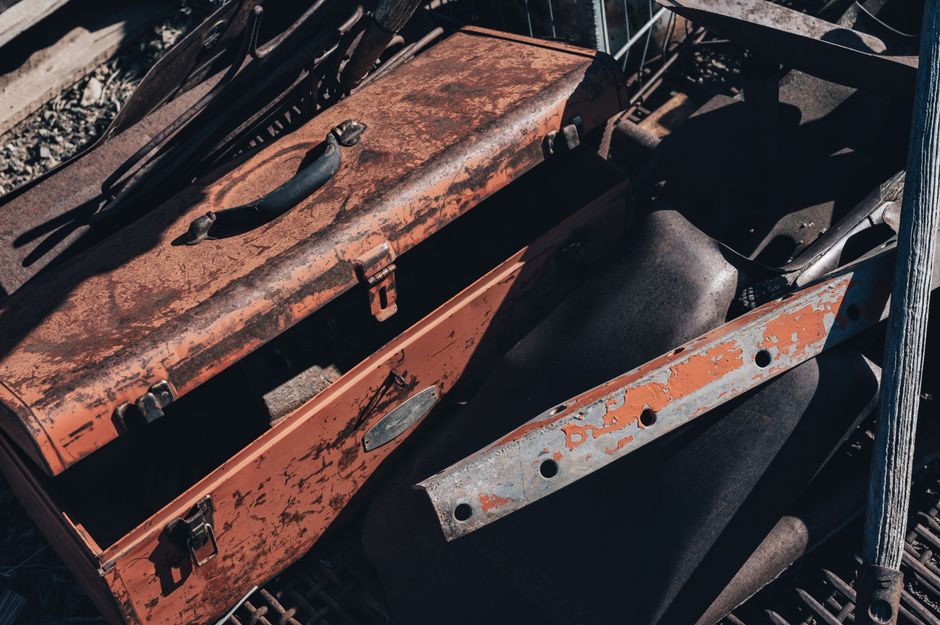
I bought a $19 bottle of rust remover and spent a Saturday on the sockets. I bought a polishing cloth for the chain and rubbed the finish thinner. Both problems came back. Then at an estate sale that summer I opened an old mechanic's toolbox to look inside, and sitting in the bottom tray next to the wrenches were four sticks of plain white blackboard chalk, worn down and a little grubby. Not one tool in that box had a speck of rust on it, and the box was older than I am.
The guy running the sale saw me staring and said his dad had done it his whole life. "Chalk drinks the water."
Why chalk works on two completely different problems
Rust and tarnish look unrelated but they share a villain: moisture in the air. Steel needs water plus oxygen to oxidize, which is why tools rust in garages and basements where the temperature swings and condensation forms on cold metal overnight. Silver tarnishes when it reacts with sulfur compounds floating around in household air, and humidity is what lets that reaction run fast, which is why jewelry left in a drawer goes dark while jewelry you wear every day stays bright.
Chalk is calcium carbonate or gypsum, and it's porous and hygroscopic, meaning it pulls water vapor out of the air around it and holds it. Put a few sticks inside a closed box and it quietly lowers the humidity in that little sealed world. No electricity, no gel packets, no $12 refills. A box of chalk costs about two dollars and lasts a year.
Step 1: Buy the right chalk: this part matters
Get plain white blackboard chalk, and specifically avoid anything labeled "dustless," "sidewalk," or colored. Dustless chalk is bound with polymers that seal the pores shut, which is the exact property you're trying to use. Sidewalk chalk has oils and binders in it. Colored chalk carries pigments you don't want rubbing off on a silver bracelet. The cheap dusty white sticks that cost two dollars for a box of twelve are the good ones here: this is one of the rare cases where the worst product is the right product.
Step 2: Get the box bone dry before you start
Empty the toolbox or jewelry box completely and wipe the inside out with a dry cloth, then leave it open for a few hours. Chalk manages humidity going forward: it can't undo moisture that's already trapped in a felt lining or sitting in the bottom of a tray. If any tools already have rust on them, clean those first, because rust spreads by contact and one bad socket will happily infect its neighbors no matter how dry you keep the air.
Step 3: Snap the sticks and spread them through the toolbox
Break four or five sticks in half and lay one piece in each drawer or tray, tucked into a corner where it won't roll around under your sockets. Don't pile them all in the bottom: moisture doesn't travel well through a packed drawer, so each compartment basically needs its own. For a big rolling chest I use about eight pieces. For a single tackle-box-sized kit, two is plenty. They'll get scuffed and powdery and look untidy, which is fine, because nobody is coming to inspect your toolbox.

My Expert Tip: Always snap the chalk in half rather than using whole sticks, and put the broken end facing up. A factory stick has a smooth, slightly compressed outer skin, and the raw fractured face has dramatically more open pore area exposed to the air, it absorbs noticeably faster. The second half of this tip: keep chalk away from pearls, opals, and emeralds. Those stones actually need a bit of ambient moisture and will craze or go dull in air that's too dry, so store them in a separate box with no chalk in it. Everything else in your jewelry box, silver, gold, plated costume pieces: benefits.
Step 4: Wrap a piece in cloth for the jewelry box
You don't want chalk dust settling on a necklace. Wrap one piece in a scrap of thin cotton, a coffee filter, or a small organza bag and tuck it into the back corner of the box. One piece handles a normal jewelry box; a big multi-drawer one wants a piece per drawer. It works in anything closed and small: I've since put pieces in my silverware chest, my camera bag, a document safe, and the drawer where I keep spare keys and batteries, and all of them stopped going furry.

Step 5: Swap the chalk twice a year
Chalk fills up. Replace it every six months, or whenever a piece feels soft, cool to the touch, or crumbles under light pressure: those are the signs it's saturated and has stopped working. I change mine when the clocks change, which is an easy thing to remember and costs about forty cents each time. Don't bother trying to dry the old pieces out in an oven; a fresh box is cheaper than the gas.

Three years in, here's where I'm at
My grandfather's sockets have not developed a single new rust spot since the chalk went in, through three garage winters. The silver chain sits bright in a box I open maybe twice a year. I've spent roughly $6 total on chalk in that time, against the $19 rust remover and the $25 I'd been quoted to have a couple of silver pieces professionally polished, and polishing removes a microscopic layer of the metal every time, so not needing to do it is worth more than the money.
The thing I like most is that it's completely passive. No plugging anything in, no recharging silica packets in the oven, no remembering. You put chalk in a box and the box stops eating your things.
If you've got a toolbox in a garage or a jewelry box you haven't opened in a while, hit the share buttons below and send this to the person who'd be most annoyed to find out it was this easy.