The Mason Jar Trick That Keeps Fresh Strawberries Crisp for 3 Weeks
I paid $6.49 for a punnet of strawberries on a Saturday and threw half of it in the bin on Tuesday. Two of them had gone that grey fuzzy way overnight, and the fuzz had spread to the four berries touching them, and the rest had gone soft and sweaty in the plastic clamshell they came in. Three days. Six dollars and forty-nine cents.
I did this roughly every week for years and treated it as a fact of life, the way you accept that lettuce dies. The worst version was my niece asking for strawberries on a Thursday and me quietly moving the container to the bin before she could see what was in it.
Then a friend who runs a small café showed me her fridge and there was a mason jar of strawberries in it from nearly three weeks earlier, and they were firm, red, and completely fine. Two steps: a quick vinegar bath, and a sealed glass jar. I've been doing it ever since and I can't remember the last time I threw a strawberry away.
Why strawberries die so fast
Two things are killing them, and the plastic clamshell they're sold in makes both worse.
The first is mold. Strawberries arrive from the field carrying invisible mold spores on their skin: every berry, every time. In the warm, humid pocket of a vented plastic container, those spores wake up and go to work, and once one berry fuzzes over, it seeds the ones touching it within a day. That's the grey explosion you find on Tuesday.
The second is moisture loss combined with oxygen. Berries are about 90% water, and in a vented container that water evaporates steadily while oxygen keeps the decay chemistry running, so they go from firm to limp and dull long before they'd ever rot.
A diluted vinegar bath kills most of the spores before they can start. A sealed glass jar slows evaporation almost to a stop and dramatically limits oxygen exchange. Neither one alone gets you three weeks. Together they reliably do.
Step 1: Sort the punnet the moment you get home
Tip the whole lot out and pull any berry that's bruised, soft, leaking, or has a white patch near the stem. One compromised berry will take down everything it touches, and it will always be the one you left in "because it's only a little bit soft." Eat those ones today. This sorting step is thirty seconds and it's the difference between a jar that lasts three weeks and a jar that lasts five days.
Step 2: Give them a 5-minute vinegar bath
Mix one part plain white vinegar to three parts cool water in a big bowl, drop the berries in, and swirl them around for about five minutes. That ratio is enough to kill surface spores and far too dilute to taste afterward: I've served these to people who had no idea. Leave the green tops on while they bathe; pulling them off first opens a wound that lets water straight into the flesh, and a waterlogged strawberry goes mushy within two days no matter what else you do.

Step 3: Rinse and drain properly
Pour them into a colander, rinse under cool running water for thirty seconds, and shake the colander hard several times. The rinse takes the vinegar off; the shaking gets the bulk of the water out of the nooks around the stems, which is exactly where moisture likes to sit and start trouble. Don't skip the shaking and assume the drying step will handle it: surface water evaporates easily, trapped water doesn't.
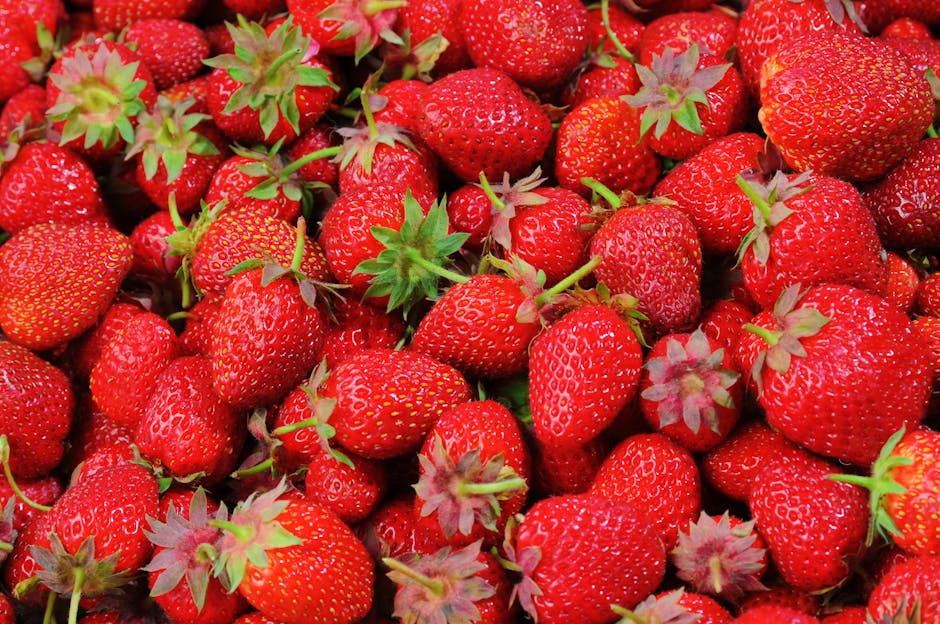
Step 4: Dry them completely: this is the step people rush
Spread the berries in a single layer on a clean towel, pat the tops gently, and leave them out for 20 to 30 minutes until they're dry to the touch. Not "mostly dry." Sealing damp berries into a glass jar builds a tiny greenhouse where condensation runs back down onto the fruit, and you'll have mold in four days instead of none in three weeks. If you're in a hurry, a salad spinner on its gentlest few turns followed by ten minutes on a towel works well.

My Expert Tip: Before you seal anything, do the paper towel test. Put one berry from the middle of the batch on a dry paper towel, count to ten, and lift it. If it leaves a damp mark, the whole batch needs another fifteen minutes, no matter how dry they look. Berries hide water in the little seed pits and under the green calyx, and your eyes cannot see it: the paper can. This one test is what took me from "this trick works sometimes" to "this trick works every time," and it costs you ten seconds.
Step 5: Pack them loosely into a dry mason jar and seal it
Use a completely dry glass jar, drop the berries in gently, and screw the lid on tight. Loose is the key word: don't press them down or fill past the shoulder of the jar, because the weight of berries stacked four deep bruises the ones at the bottom and a bruise is an open invitation. For a big haul use two jars rather than cramming one. Glass matters too: plastic containers are gas-permeable and don't hold a seal the same way.
Step 6: Put the jar at the back of a middle shelf
Store it toward the back of a middle shelf: not in the crisper drawer and never in the door. The crisper is designed to hold humidity in, which is the opposite of what you want, and the door swings through a temperature change every time someone opens the fridge. Those swings cause condensation to form inside the jar, and condensation is the one thing that ends this early. Check the glass on day two: if you see fog on the inside, tip them out, dry them again, and re-jar. After that it'll hold.
What this has actually done for my grocery bill
Strawberries went from three to five days to consistently two and a half weeks, and on a couple of occasions past three. I was binning roughly half a punnet a week at around $3 of waste: call it $150 a year in fruit I carried home and threw out. The prep is about six minutes once a week, most of it standing around waiting for berries to dry.
The better outcome is subtler. Fruit that survives gets eaten. When strawberries are reliably in the fridge on a Thursday, they become the snack people actually reach for instead of the thing that was a nice idea on Saturday.
Same method works for blueberries, which last even longer, and for cherries. Raspberries and blackberries are more fragile: treat them the same way but expect about a week, and never stack them more than two layers deep.
If there's a clamshell of strawberries sweating in your fridge right now, hit the share buttons below and send this to whoever in your house keeps buying fruit with the best of intentions.